Our clients were experienced investors who understood that the best commercial property deals aren't always the cleanest ones. They had the appetite and the financial position to take on an asset that needed work, not a cosmetic refresh, but a genuine problem to solve. The brief was specific: secure a well-located commercial property trading below its intrinsic value because of a fixable issue that was scaring off other buyers. They wanted an asset where active management, not market timing, would create the upside. The harder the problem looked on paper, the more interested they were, provided the fundamentals were sound and the downside was contained.
We targeted assets with a combination of short lease terms and physical issues, the two things that scare institutional buyers and drive aggressive discounting. The logic was simple: a short lease means the vendor can't demonstrate long-term income security, which compresses the price. A physical defect on top of that creates a second layer of uncertainty that most buyers won't price through. But if the location is strong, the building is fundamentally sound, and the defect is repairable, you're buying a reset opportunity. You take the vacancy risk, fix the issue, re-lease at current market rates, and the property revalues on the new income. The discount at entry becomes your margin of safety, and the re-lease becomes your equity event.
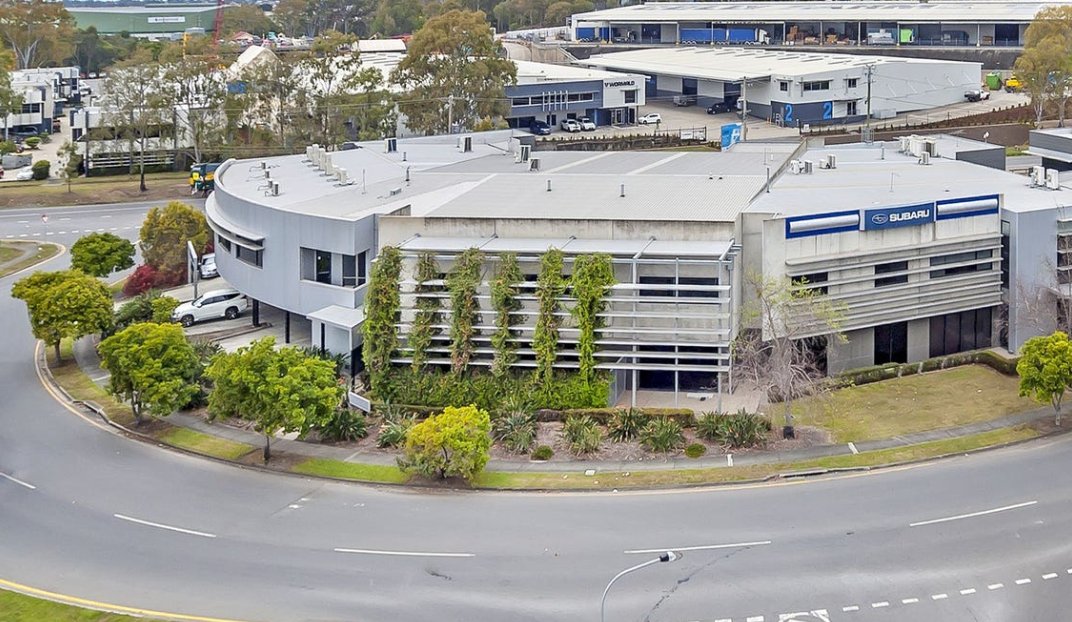
We identified a 693m² two-level office in Brisbane's TradeCoast South precinct, a tightly held commercial and industrial corridor 8 kilometres east of the CBD with direct access to the Gateway Motorway, the Port of Brisbane, and Brisbane Airport. The property was fitted out to a high standard across both levels with 24 on-site car parks, a private courtyard, and fibre optic connectivity. On paper, it looked like a quality asset in a quality location.
The problem was twofold. The existing tenant was on a short-term lease that was about to expire, with no certainty of renewal. And the building had a floor subsidence issue that needed addressing. The vendor was asking $1.5 million. Most buyers walked away. We saw the opportunity. The location was strong, the fit-out was valuable, the car parking was excellent, and the floor issue was structural but repairable. The short lease was the market's problem; it was our opportunity.
We negotiated the purchase at $1,275,000 (15% below the asking price), reflecting the lease risk and the remediation required. At that price, the passing income of $115,000 per annum delivered a 9.0% yield on cost. The vendor accepted because the alternative was holding a short-lease asset with a known defect in an uncertain market.
After settlement, the floor remediation was completed and the property was taken to market for re-leasing. The result: a new tenant secured on a medium-term lease at over $180,000 per annum, a 56% increase on the passing rent at purchase. The property transformed from a discounted, short-lease risk into a stabilised, income-producing asset in a premium location.
The numbers tell the story. Purchased at $1,275,000 with $115,000 in passing income. Re-leased at over $180,000 per annum, a 56% rental uplift. At a 6% capitalisation rate, the property now supports a valuation of $3 million. That's $1.7 million in equity created through a combination of buying well, solving a problem other buyers wouldn't touch, and re-leasing at market. The yield on the original purchase price now sits above 14%. This is what active commercial property investment looks like. Not every deal is a clean, tenanted, set-and-forget acquisition. Sometimes the best returns come from the assets that need the most work, provided you understand the risk, have the strategy to manage it, and move decisively when the opportunity presents.
Start with a 15-minute discovery call. We'll talk through where you are, what you're working toward, and whether a deeper strategy meeting is the right next step.
Book a Discovery Call